
Written summary
Geoffrey A. Moore · Day 14 of 30
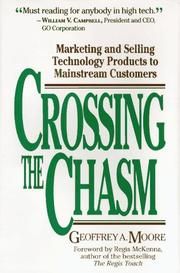
Crossing the Chasm, by Geoffrey A. Moore, is a book about why so many promising new products win a few early fans and then stall. Moore started out as an English literature professor in Michigan, then moved to California, went into sales and marketing at technology companies, and worked at the Regis McKenna consulting firm in Silicon Valley. The book came out in 1991, with new editions in 1999 and 2014. Moore and his publisher expected maybe five thousand copies; the publisher now says it has sold more than a million.
Its central claim is that between the early buyers of something new and the mainstream there is a gap, a chasm, where many products quietly die, and that the way across is to win one small, specific group of customers completely. The book is mostly about technology companies, and it uses cases like the Segway, a D-Day image from the Second World War, and the software company Documentum.
This is an independent written summary of the main ideas, in our own words, based on the Road MBA episode. We're not affiliated with the author or publisher, and nothing replaces reading the book.
When something truly new arrives, people take it up one group after another: technology enthusiasts, who love new things for their own sake; visionaries, who see a big advantage and want to get there first; pragmatists, the early majority; conservatives; and finally skeptics, who mostly never buy. The usual drawing is a smooth bell curve. Moore says it isn't smooth. Between the visionaries and the pragmatists there is a chasm.
This is about products that ask people to change how they do things, not a slightly better version of something they already use. Moore's examples go beyond software: an electric car instead of a gas one, laser eye surgery instead of glasses. Anything that needs new habits, and often new support around you.
Visionaries are buying a breakthrough. They'll take real risks, work with a tiny company and put up with bugs. Pragmatists are buying an improvement to how things already work: in the book's words, evolution, not revolution. They want it to work, to fit with what they have, and to come from a company that will still be around.
Pragmatists decide by asking people like them, and they don't trust visionaries as references. So the only good reference for a pragmatist is another pragmatist, but no pragmatist wants to be first. The Segway is the example: brilliant balance technology, seen in malls and airports, but it never found the one use that made normal people need it, so, as Moore puts it, it stayed in the chasm.
Moore borrows an image from D-Day, June 1944. The long term goal was all of Western Europe, but the plan started with a few specific beaches: overwhelming force on one small target, win it completely, then move out. For a company, the beachhead is a niche, one group of mainstream customers who share a problem and talk to each other. Pragmatists learn from their peers, so word of mouth only builds when enough people in one group use the product. Win one group and you become its leader, and pragmatists like to buy from the leader. The niche should be big enough to matter, small enough to lead, and a good fit with what you do best.
Choosing the niche is what Moore calls a high risk, low data decision. Instead of spreadsheets, picture a specific kind of customer, on a specific day, stuck with a specific problem, and ask whether the pain is bad enough that they must act now. That is a compelling reason to buy. You don't have to pick the perfect beachhead. You have to win the one you picked.
Building on an idea from Theodore Levitt, Moore points to the gap between what you promise and what the thing you ship can do on its own. Visionaries fill that gap themselves. Pragmatists won't. They need the setup, training, support and connection to the systems they already use, often with partners' help. For one niche that's possible. For the whole market at once, it isn't.
Pragmatists don't like to buy until they can compare. If you're the only thing of your kind, put yourself in a category they already know, next to choices they trust, and show why you're the obvious pick for their situation. Then pass the elevator test: if you can't explain it in the time of an elevator ride, people can't pass it on.
In 1993, Documentum, spun out of Xerox, had flat sales of around two million dollars a year for three years. The new chief executive, Jeff Miller, picked one tiny target: the regulatory affairs departments of the largest drug companies, about forty in the world. The pain was huge. Their drug approval applications ran to hundreds of thousands of pages, every day of paperwork cost patent life, and in the book's estimate the delay cost about a million dollars a day. Documentum built the whole solution for that job. Within a year about thirty of the top forty had committed, and sales grew to eight, twenty five, forty five and then seventy five million. Then it spread like bowling pins: to research and factory floors, chemical plants, oil refineries and Wall Street. Banks became the biggest customers, but Moore says they were the wrong place to start: their need was wider, but less urgent.
The one idea to keep: don't try to win everyone at once; pick the small group with the biggest pain, win them completely, and let them carry you to the next.
Your first day is free, no card. Then all 30 for $29, one time.