
Written summary
Brian Tracy · Day 1 of 30
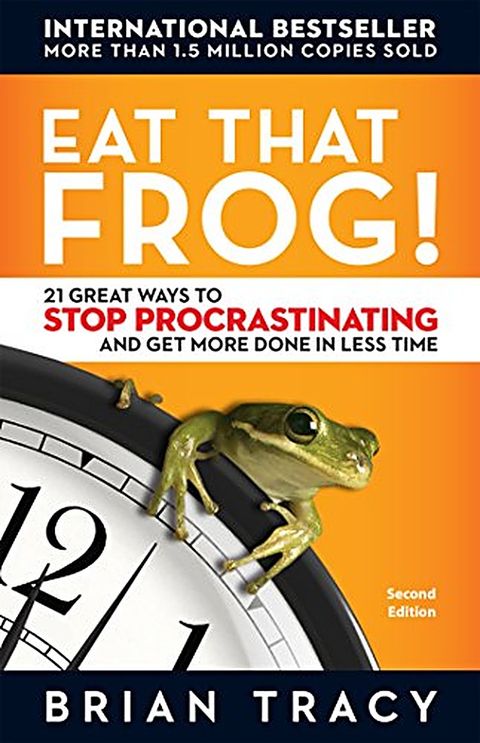
Eat That Frog!, by Brian Tracy, is a short, practical book about one habit: doing your most important task first. The title comes from an old saying, often credited to Mark Twain although nobody has found it in his writing. If the first thing you do each morning is eat a live frog, you can go through the rest of the day knowing the worst is behind you. In Tracy's book, your frog is your biggest, most important task, the one you are most likely to put off and the one that would make the biggest difference if you got it done.
The central claim is that getting ahead depends less on talent or circumstances than on choosing the right task and starting on it before anything else. Tracy builds the book around simple rules of thumb and sorting methods, and he anchors it in a finding from Harvard, where the political scientist Edward Banfield spent years asking why some people move up in life while others with the same start stay where they are.
This is an independent written summary of the main ideas, in our own words, based on the Road MBA episode. We're not affiliated with the author or publisher, and nothing replaces reading the book.
The saying comes with two rules, and this is the first. When you have two important jobs, start with the harder, more important one.
You can't eat the right frog if you don't know what it is. Decide exactly what you want and write it down, because a goal that only lives in your head stays vague. Give it a deadline, list everything you'd need to do to get there, and put that list in order. Then do something toward it right away, and something every single day. Tracy's rule of thumb is that every minute of planning saves about ten minutes of doing, so he asks you to write tomorrow's list the night before.
In most lists, a small share of the items produces most of the value. Give yourself ten tasks and two of them will be worth more than the other eight put together. The trap is that the valuable tasks are usually the hard ones, while the easy ones feel productive. So people clear the inbox, tidy the desk and answer small questions, and at the end of the day the big thing is still sitting there. To tell which task matters most, look at the consequences: an important task is one whose results will still be felt months or years from now.
Before you start, mark each item with a letter. Then follow one rule: never do a B task while an A task is still waiting. If you have several A tasks, number them. Your A one is your frog.
Tracy adds an idea he calls creative procrastination. You will never do everything, so you will always be putting something off. The question is whether you choose what to postpone, or let it happen to you.
Every job depends on a few areas. A salesperson has to find prospects, present well and close. A manager has to plan, hire and develop people. Ask how good you are in each, because your weakest key skill tends to limit everything else. And ask every day: what can I, and only I, do that, if done well, will make a real difference? If you don't do it, it won't get done.
There is never enough time to do everything, but there is always enough time for the most important thing. Imagine you have to leave town tomorrow for a whole month and can finish only one or two things first. Whatever you name is your frog. Tracy suggests acting as if you had that deadline even when nobody gave you one. Most people wait for pressure from outside; the people who get the most done put that pressure on themselves.
Begin before email and messages pull you in. Technology, Tracy says, is a wonderful servant and a terrible master, so turn off the alerts and keep blocks of time with no interruptions. Then work on the one task until it's done. He calls this single handling: every time you put a task down and pick it back up, you pay a cost to get going again. If the frog is too big, slice it like salami, commit to one thin piece and finish it. A finished piece gives you momentum.
Clear your desk, gather what you'll need and sit down as if you mean it, because a cluttered start is an easy excuse to stop. Completing an important task gives you a real lift of energy and confidence, and Tracy argues you can get hooked on that feeling in a good way. Talk to yourself like a coach, not a critic: instead of telling yourself it's too much, say "I can do this" and pick up the first slice.
Banfield expected the answer to be family, schooling, connections or raw intelligence. Those mattered less than he thought. The factor he found was what he called time perspective: how far into the future you think when you decide what to do today. People who moved up made today's choices with the next five, ten or twenty years in mind, and accepted a little discomfort now for a much bigger payoff later. People who stayed stuck chose whatever felt best right now. Doing the hard, important task first is long term thinking practiced one morning at a time. And that leads to the second rule of the frog: if you have to eat a live frog, it doesn't pay to sit and look at it for very long. Dreading the task only makes it bigger.
The one idea to keep: find the task with the biggest long term consequences, usually the one you most want to put off, and eat it first thing. The Road MBA episode walks through it in about ten minutes.
Your first day is free, no card. Then all 30 for $29, one time.