
Written summary
Andrew S. Grove · Day 20 of 30
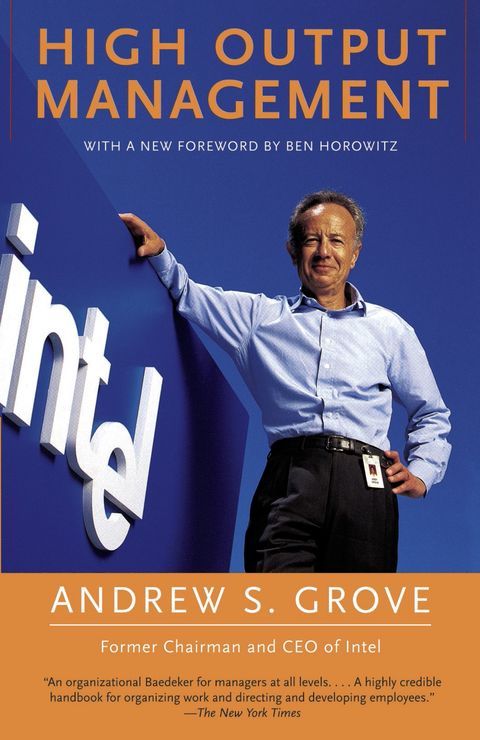
High Output Management, by Andrew S. Grove, is a practical manual on what a manager actually does all day, and how to do it well. Grove was born in Budapest in 1936. As a Jewish boy he survived the Nazi occupation by hiding with his mother under a false name, and at twenty he escaped Hungary during the revolution of 1956. In the United States he studied engineering in New York, earned a doctorate at Berkeley, and in 1968 became the third employee of a new company called Intel. He later became its chief executive, and in 1997 Time magazine named him Man of the Year.
The book came out in 1983, while Grove was running Intel day to day as its president. It never made the best seller lists. Decades later it became a cult classic in Silicon Valley, praised by founders like Brian Chesky of Airbnb and investors like Ben Horowitz.
This is an independent written summary of the main ideas, in our own words, based on the Road MBA episode. We're not affiliated with the author or publisher, and nothing replaces reading the book.
Grove calls this the single most important sentence in the book: the output of a manager is the output of the organizational units under his supervision or influence. Your output is not the emails you sent or the meetings you attended. It's what your team produces, plus what the teams you influence produce. A manager who works late every night while the team stalls has low output. A manager who works less, but whose team delivers, has high output.
Some activities affect one task, once. Others affect many people for a long time. Grove names three sources of high leverage: when one manager's action touches many people; when a short, well focused word or action changes how someone works for a long time; and when one person holds a unique piece of knowledge that a whole group depends on. A performance review is an example of the second: a few hours of preparation can change how a person works enormously, in either direction.
Grove tells of an Intel manager who saw his division would still lose money the following year, got depressed, and spread that mood through his whole organization without realizing it, until someone on his staff told him. Meddling is another kind: a manager who jumps into someone's work teaches that person to hand every problem back up. So is waffling, putting off a decision that other people's work depends on. In Grove's words, no green light is a red light.
A regular private meeting between a manager and each direct report is one of Grove's favorite tools, with a twist: it's the subordinate's meeting. They set the agenda and the tone and prepare a short outline. A manager with eight people would have to prepare eight times; each person only prepares once. Discuss their numbers, anything new since last time, and above all the problems that nag them, even a feeling that something's wrong. Both people take notes. Writing down an action right after agreeing to it, Grove says, is like a handshake. His math: ninety minutes every two weeks can improve the quality of someone's work for some eighty plus hours.
Task relevant maturity is not age or general experience, but how much experience a person has with this specific task. When it's low, give clear structure: what to do, when and how, with one on ones as often as weekly. As it grows, shift to the person, with more support and more conversation. When it's high, set objectives and monitor, meeting every few weeks. Grove's example is an army sergeant who barely gives orders in a quiet camp, then barks instructions the moment enemies come over the hill. The people didn't change. The task did.
When someone isn't performing, Grove's test is simple: if this person's life depended on doing the work, could they do it? If yes, it's motivation. If no, it's ability, and that calls for training. If his own life depended on playing the violin, he says, he couldn't do it. Running a mile in six minutes, he probably could.
First, free discussion, where every view is heard and people say what they really think. Second, a clear decision, stated plainly. Third, full support from everyone. Full support does not mean agreement: people can disagree and still commit. An organization lives by people committing to support the decisions of the business.
Grove's planning asks two questions. Where do I want to go? That's the objective. How will I pace myself to know I'm getting there? Those are the key results. You need to catch a plane in an hour, and on the way you pass through three towns. Reaching them at ten, twenty and thirty minutes are your key results. If you've been driving twenty minutes and haven't reached the first town, you know you're in trouble while there's still time to act. This is the root of what many companies now call OKRs.
The book starts with Grove's college job as a waiter: a three minute soft boiled egg, buttered toast and a cup of coffee must reach the table at the same moment, each one fresh and hot. The egg takes the longest and matters most, so you plan the whole job around it and work backwards: start the egg, then the toast at the right moment, then pour the coffee last. Grove grows the kitchen into a breakfast factory and shows the same thinking applies to hiring college graduates or building software. Find the step that sets the pace, plan around it, and watch a few simple indicators that warn you before the customer complains.
A word of honesty: this is a manual, and ten minutes can't hold all of it. The book goes much deeper on meetings, performance reviews, pay and hiring.
The one idea to keep: your output is not what you do. It's what your team produces, so spend your time where one action moves the most people.
Your first day is free, no card. Then all 30 for $29, one time.