
Written summary
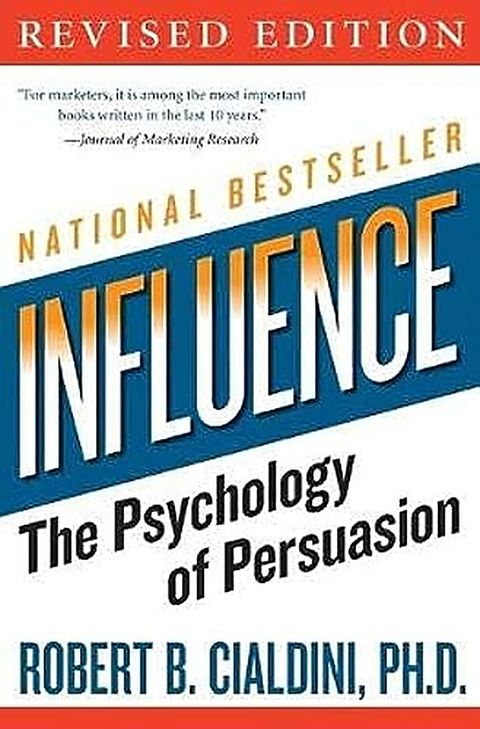
Robert Cialdini · Day 6 of 30
Influence: The Psychology of Persuasion, by Robert Cialdini, explains why people say yes. Cialdini is a psychologist who studied persuasion in the lab for years, then wanted to see it in the real world. So he went undercover, signing up as a trainee in sales, advertising and fundraising to watch how professionals get people to agree.
His central claim is that our world is too full and too fast to think through every decision, so we use shortcuts. A trigger appears and we respond on autopilot. Most of the time that works, which is why we have shortcuts. But people who know the triggers can set them off on purpose. Cialdini found six of them, and he illustrates each with experiments and real cases, from a mother turkey to a jewelry store in Arizona.
This is an independent written summary of the main ideas, in our own words, based on the Road MBA episode. We're not affiliated with the author or publisher, and nothing replaces reading the book.
Mother turkeys are devoted parents, but researchers found that almost all their care is triggered by one sound: the cheep cheep of the chicks. A mother turkey attacked a stuffed polecat, a natural enemy. When a recorder inside it played cheep cheep, she gathered the polecat under her wings. It sounds ridiculous until you realize we do the same thing.
If someone gives us something, we feel we have to give something back. At Cornell, Dennis Regan had a secret helper bring a participant an unrequested Coke, then later ask them to buy raffle tickets. Those who got the Coke bought about twice as many tickets, whether or not they liked him. The pull can last generations: in 1985, during a terrible famine, the Ethiopian Red Cross sent five thousand dollars to Mexico after the Mexico City earthquakes, because Mexico had stood by Ethiopia when Italy invaded in 1935.
A boy asked Cialdini to buy five dollar tickets to a Boy Scout circus. He said no. The boy then offered chocolate bars for a dollar, and Cialdini bought two, though he doesn't even like chocolate. His team tested it: few students agreed to chaperone young offenders on a zoo trip, but when first asked to counsel them two hours a week for two years and then offered the zoo trip, three times as many said yes.
Once we take a stand, we want to stay consistent with it. Most homeowners refused to put a huge, ugly Drive Carefully sign on their lawn. But seventy six percent agreed in one group, because two weeks earlier they had accepted a tiny window sign about being a safe driver. That small yes changed how they saw themselves. That's why salespeople love a free trial, a quick survey or a tiny first order.
When we are not sure what to do, we look at what others are doing. Almost everybody says they hate canned laughter, yet it makes people laugh more and rate shows as funnier. Bartenders put a few bills in the tip jar at the start of the night. Social proof is strongest when we feel uncertain and the people we watch seem similar to us.
We say yes to people we like. Joe Girard, called by the Guinness Book of World Records the greatest car salesman in the world, mailed a card every month to more than thirteen thousand former customers. The holiday changed; the message never did: I like you. We like people who are similar to us, compliment us, are familiar, and are connected with good things.
We tend to obey people who seem to be in charge. In the Milgram experiments, about two thirds of ordinary people, told by a researcher in a gray lab coat, kept giving what they believed were stronger electric shocks all the way to the maximum. In a hospital case, a prescription for ear drops in the "R ear" led a nurse to put them in the patient's rear, and nobody questioned it. A title, a uniform or an expensive suit can be enough.
We want things more when they are harder to get. People rated cookies from a jar with two cookies as more desirable than from a jar with ten, and rated them highest when they watched a jar drop from ten to two. Losing something we had feels worse than never having it. That's why we see only three left in stock, offer ends tonight, or exclusive for members.
In Arizona at the peak of tourist season, a store owner couldn't sell a batch of turquoise jewelry. Before a trip, she left a note to sell it at price times one half. The saleswoman misread it and doubled the price, and every piece sold. The tourists couldn't judge turquoise, so they used a shortcut: expensive means good. They weren't really buying turquoise. They were buying a shortcut.
The one idea to keep: influence is a click and a whirr, and once you can hear it, you get to choose. The Road MBA episode tells these stories in about ten minutes.
Your first day is free, no card. Then all 30 for $29, one time.