
Written summary
Viktor Frankl · Day 29 of 30
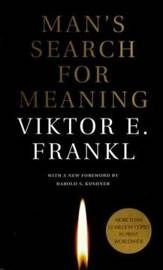
Man's Search for Meaning, by Viktor E. Frankl, is a memoir of the Holocaust before it is anything else, and it should be treated with that care. Frankl was a neurologist and psychiatrist in Vienna. At fifteen he gave his first public lecture, on the meaning of life, and in the 1930s he ran a ward for suicidal women at Vienna's big psychiatric hospital. In 1940 he had a visa to emigrate to America, and he let it expire rather than leave his old parents behind. In 1942 he, his young wife Tilly and his parents were deported to Theresienstadt. He later passed through Auschwitz and two camps that belonged to Dachau, and was freed by American troops on April 27, 1945.
The book has two parts. The first is what he lived, written like a doctor taking notes on himself. The second is his theory, logotherapy, from the Greek word logos, meaning. Its central claim is that our deepest drive is meaning, and that even when everything else is taken, we keep the freedom to choose our attitude. This is not a business book, and a concentration camp is not a productivity tip. But a working person can take a few careful lessons from it.
This is an independent written summary of the main ideas, in our own words, based on the Road MBA episode. We're not affiliated with the author or publisher, and nothing replaces reading the book.
Frankl describes shock on arrival, then apathy, when a prisoner stops feeling in order to survive. After liberation comes a third stage most people never think about: bitterness and disappointment, when the world outside doesn't understand and the people you came home for are gone.
The book's most famous line says everything can be taken from a man but one thing: the last of the human freedoms, to choose one's attitude in any given set of circumstances, to choose one's own way. Frankl saw people walk through the huts comforting others. They were few, he says, but enough to prove that choice was never fully gone.
Frankl quotes Nietzsche: he who has a why to live for can bear with almost any how. Prisoners who had someone waiting for them, or work left unfinished, held on differently. For Frankl it was the image of his wife and the effort to rebuild a lost manuscript. He and the men around him stopped asking what they could still expect from life, and asked what life expected from them, today, in this hour.
Freud said we are driven by pleasure, Adler said power, and Frankl said meaning. We find it by creating a work or doing a deed, by experiencing something or loving someone, and by the attitude we take toward suffering we can't avoid. He tells of an old doctor who could not get over his wife's death. Frankl asked what would have happened if he had died first. That would have been terrible for her, the doctor said. Then you spared her that suffering, Frankl answered, and the price is that you survive and mourn her. Suffering changes once it finds a meaning. But if suffering can be avoided, the meaningful thing is to remove its cause.
Frankl writes that he came back by many lucky chances, and that the best of them did not return. Some critics, like the scholar Richard Middleton Kaplan, argue that the book can make it sound as if those who died had simply given up. That is not true, and it is worth keeping in mind.
Frankl wrote that the more you aim at success, the more you miss it. It has to ensue, as the side effect of giving yourself to something bigger than you. Decades later, Wharton professor Adam Grant tested something close in a university call center. Callers who spent five minutes with a student whose scholarship came from the fundraising spent more than twice as long on the phone a month later, and brought in about five hundred dollars a week, up from under two hundred.
A famous quote about a space between stimulus and response is often credited to Frankl, but he didn't write it. It became famous later, through Stephen Covey. The idea in the book is close, though. A bad email, a lost client or a boss in a bad mood are not your choice. What you do in the next minute is.
In Theresienstadt, Frankl set up a team to help shocked new arrivals and prevent suicides. Later, on a day the whole camp was made to go without food because prisoners would not give up a fellow inmate, he told the men in his hut that someone was looking down on each of them, a friend, a family member or God, who would not want to be disappointed. Scared people don't need a slogan. They need a reason, and someone who stays.
Before dawn one winter, prisoners stumbled along an icy road to a work site. The man next to Frankl whispered, if our wives could see us now. Frankl began thinking of Tilly, not knowing if she was alive, and as the sky turned pink he heard her answer and saw her smile, and felt something close to happiness. His father died in Theresienstadt, and his mother and brother were murdered. The manuscript of his first book, hidden in his coat lining, was taken at Auschwitz, and sick with typhoid he rebuilt it on scraps of stolen paper. In 1945 he returned to Vienna and learned within days that his wife, his mother and his brother were all dead. A friend found him an apartment, a job and a typewriter, and in 1946, in just nine days, he dictated this book. As of 2022 it had sold sixteen million copies in fifty two languages.
The one idea to keep: you can't always choose what happens to you, but you can always choose your answer, and the best answers serve someone beyond yourself. The Road MBA episode tells this story with care.
Your first day is free, no card. Then all 30 for $29, one time.