
Written summary
Walter Isaacson · Day 25 of 30
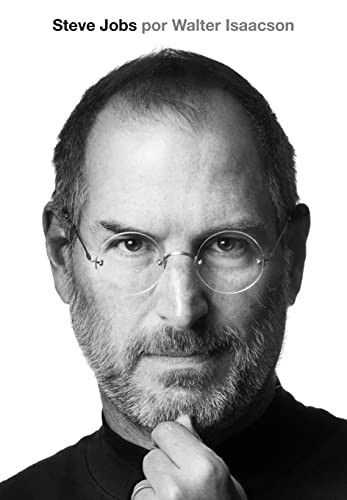
Steve Jobs, by Walter Isaacson, is the biography of Apple's cofounder, written by a former editor of Time and former head of CNN who had already written about Benjamin Franklin. Jobs first called Isaacson in the early summer of 2004 and asked him to write it. Isaacson did more than forty interviews with Jobs over two years and talked to more than a hundred friends, family members, rivals and colleagues. Jobs asked for no control over the content, only a say on the cover. The book came out on October 24, 2011, nineteen days after he died. Asked why such a private man had opened up so much, Jobs said he wanted his kids to know him and to understand what he did.
This is not a how to book. It is more than six hundred pages of one very intense life, and some of that life should not be copied. But running through it are a few ideas anyone can use at work: expect more than seems possible, focus by saying no, join art and technology, and replace your own products before someone else does. The stories range from a fence in a family garden to the first Macintosh, the iPod and the iPhone.
This is an independent written summary of the main ideas, in our own words, based on the Road MBA episode. We're not affiliated with the author or publisher, and nothing replaces reading the book.
Jobs was born in San Francisco in 1955 and adopted by Paul and Clara Jobs. He spent one semester at Reed College, dropped out, and kept sitting in on classes, including calligraphy. In 1976 he started Apple with his friend Steve Wozniak. In 1983 he hired John Sculley, the president of Pepsi, by asking if he wanted to sell sugar water for the rest of his life or come and change the world. Two years later Apple's board pushed Jobs out. He started NeXT, bought the computer graphics group of Lucasfilm, which became Pixar and made Toy Story, and in 1997 came back to an Apple close to going under.
The Mac team called it the reality distortion field. Jobs told engineer Larry Kenyon the Mac took too long to start, and asked if he would shave ten seconds off the boot time to save a life. Then he did the math on a whiteboard: five million users waiting ten extra seconds a day is around three hundred million hours a year, at least one hundred lifetimes. Put that way, ten seconds mattered.
For the first iPhone, Jobs wanted tough, scratch proof glass and asked Corning for as much as it could make within six months. Corning's boss, Wendell Weeks, said none of their plants even made that glass. Jobs told him not to be afraid. When the iPhone went on sale that June, it had Corning's glass on the front. As one colleague put it, you did the impossible because you didn't realize it was impossible.
When Jobs came back in 1997, Apple sold a dozen versions of the Macintosh and a pile of other products. He kept asking which ones he should tell his friends to buy, and nobody had a simple answer. So he drew a grid of four boxes: consumer and pro, desktop and portable. Four great products, everything else cancelled. In the year to September 1997 Apple lost about a billion dollars. A year later it made a profit. Deciding what not to do, he said, is as important as deciding what to do.
Jobs later said that without his calligraphy class the Mac might never have had its beautiful typefaces. His launches often ended on two crossing street signs: liberal arts and technology. For the iPod his main demand was one word, simplify. Any song or function had to be reachable in three clicks, and the click had to feel obvious.
One of his rules, in Isaacson's words, was never to be afraid of cannibalizing yourself, because if you don't, someone else will. It is the lesson of The Innovator's Dilemma in one sentence. Apple kept launching: the iPod in 2001, the iTunes Store in 2003, the iPhone in 2007 and the iPad in 2010.
Isaacson doesn't hide how hard Jobs could be. People were brilliant or useless, work was the best or garbage, and the verdict could flip the next day. Some people close to him, including Tim Cook, said the book made him sound like someone they would never have wanted to work with. The lesson is to take the standards without the cruelty. Even one of his best engineers said you could push back on him, as long as you also listened.
In Mountain View, California, Paul Jobs, a mechanic who could build almost anything, was putting up a fence and handed his young son a hammer. The back of the fence, he told him, the side nobody will ever see, has to be just as good as the front. Years later, while the first Macintosh was being built, Jobs complained that the lines on the circuit board inside were too close together and looked ugly, though no customer would ever see them. When the design was locked, he called the team together, said real artists sign their work, and had everyone sign a sheet of paper. Those signatures were engraved inside every Macintosh. No one would see them, but the team knew they were there.
The one idea to keep: do fewer things, and make the part nobody sees as good as the part everybody sees. The Road MBA episode tells these stories in full.
Your first day is free, no card. Then all 30 for $29, one time.