
Written summary
Ben Horowitz · Day 18 of 30
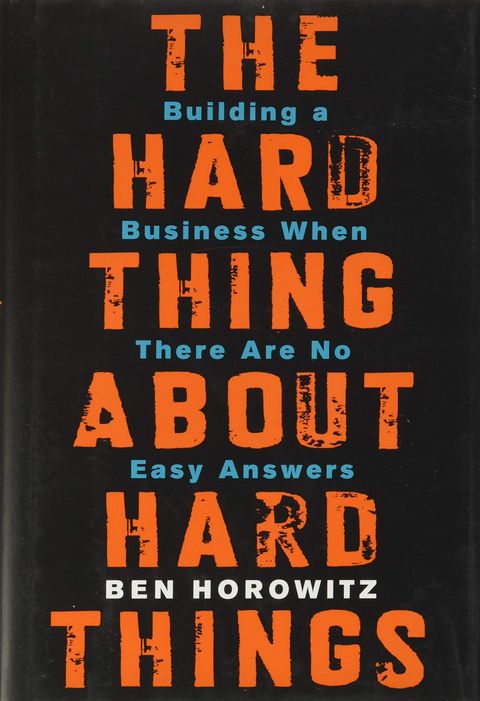
The Hard Thing About Hard Things, by Ben Horowitz, is a book about the parts of running a company that nobody talks about. Horowitz is an American entrepreneur and investor. He worked on the early web at Netscape, co-founded Loudcloud in 1999, ran it through the internet crash and the turnaround, and later co-founded the investment firm Andreessen Horowitz with Marc Andreessen. For years he wrote a blog about those hard parts, and in 2014 the posts became this book.
Its premise is simple. Management books tell you how to do things right when things are going well. The hard thing is what to do when there is no right answer, when every option is bad, and you still have to pick one. The book draws mostly on Horowitz's own fights: at Netscape against Microsoft, and at Loudcloud, later Opsware, where shares first sold at six dollars fell to about thirty five cents before the company's comeback.
This is an independent written summary of the main ideas, in our own words, based on the Road MBA episode. We're not affiliated with the author or publisher, and nothing replaces reading the book.
The Struggle, with a capital S, is the stretch when you wonder why you ever started, when your team thinks you're lying and part of you thinks they might be right, and when you're surrounded by people and still feel completely alone. Some people make it through and some don't. But every leader of anything hard goes through it, so feeling it doesn't mean you're bad at your job. And the Struggle is where great companies are made.
Horowitz offers no cure, only what helped him:
When things go wrong, leaders feel huge pressure to sound positive. Resist it. If people don't trust what you tell them, communication breaks down, and the more people who know the real problem, the more can help solve it. When Opsware was losing too many deals to a rival, Horowitz told everyone plainly that they were losing badly and the company could die if it didn't stop. The team didn't panic. They rallied.
At Netscape, Microsoft had a new web server that did everything Netscape's did, ran five times faster, and was about to be given away free. Horowitz rushed toward clever deals to dodge the fight. An experienced engineer stopped him: no silver bullet fixes a server five times slower; we'll need a lot of lead bullets. The team fixed the speed, caught up, and grew that product line into a large business. Years later at Opsware, people proposed clever escapes: a lighter product for smaller customers, buying another company, changing the market. Horowitz saw customers were buying, just not his product, so the answer was building a better one through hard, unglamorous work. By his account, after about nine months they took back the lead.
Without a good place to work, good people leave, and then you have neither products nor profits. That includes the hardest moments. If you must lay people off, do it fast once decided, be clear about why, have managers tell their own people, and say plainly it was the company's failure, not theirs.
Look for real strength where the job needs it most, not just a candidate with no obvious weaknesses. A safe, average hire can be the most expensive mistake of all. If you have to let a senior leader go, start by asking what went wrong in your own hiring. Usually the way you defined the job, or the way you chose, failed, not the person.
In peacetime, the company has a clear advantage and a growing market, and the leader widens the opportunity, encourages creativity and lets people decide. In wartime, the company's life is threatened: one bullet in the chamber, one target for everyone. The wartime leader gets into the details, breaks protocol when it helps and cuts debate short. When Steve Jobs returned to Apple, weeks from bankruptcy, everyone had to follow one plan. Google, once it dominated search, could afford letting employees spend part of the week on their own projects. Neither style is better; the danger is using the wrong one at the wrong time. Horowitz admits he was better in wartime.
In 2002, a year after Loudcloud went public as the internet boom turned to bust, Horowitz sold the part of the business that brought in all its revenue to the services giant EDS for sixty three and a half million dollars. He kept the software his team had built for itself, whose first big customer would be EDS, and renamed the company Opsware. It grew to hundreds of business customers, and in 2007 Hewlett Packard bought it for about one point six billion dollars in cash, at fourteen dollars and twenty five cents a share. Not through a silver bullet, but through years of hard choices and lead bullets.
The one idea to keep: hard situations have no formula. Tell the truth quickly, share the load, put people first, and when you're behind, skip the silver bullets and do the hard work head on.
Your first day is free, no card. Then all 30 for $29, one time.